IV Vitamin C

Intravenous Vitamin C (IVC)
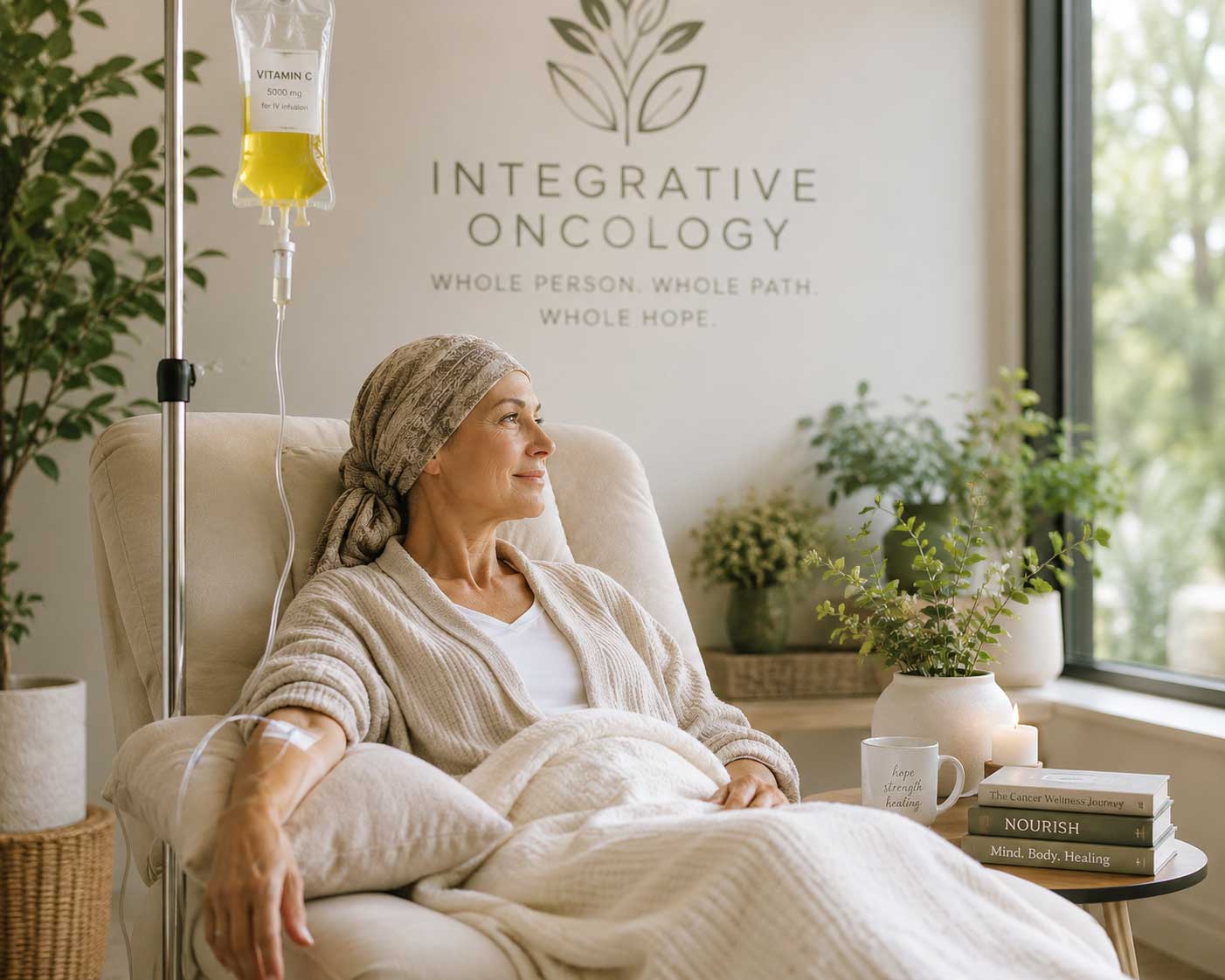
High-dose IV vitamin C is commonly used in integrative oncology as a supportive therapy for people going through cancer treatment. Unlike regular oral vitamin C supplements, intravenous (IV) vitamin C allows much higher therapeutic levels to circulate in the bloodstream, which may provide unique benefits for the body during cancer care.
Research suggests that high-dose IV vitamin C may help support immune health, reduce inflammation, improve energy and recovery, and lessen some of the side effects commonly associated with chemotherapy and radiation, including fatigue, pain, nausea, and decreased appetite. Many patients report improvements in overall quality of life and functional well-being during treatment.
At high concentrations, IV vitamin C may also help create oxidative stress inside the tumor environment — a process that some cancer cells are less able to defend against compared to healthy cells. Early research suggests this may help make certain cancer cells more vulnerable while supporting healthy tissue and recovery.
Emerging studies also suggest that IV vitamin C may work synergistically with therapies such as chemotherapy, radiation, hyperthermia, and other metabolic approaches used in integrative oncology. High-dose IV vitamin C may not only improve quality of life and reduce treatment-related side effects, but may also contribute to improved treatment outcomes and prolonged survival in certain cancers when used alongside conventional therapies. Although additional large-scale studies are still needed, some clinical trials in pancreatic cancer, ovarian cancer, and glioblastoma have shown promising results when IV vitamin C is incorporated into comprehensive cancer care.
At Flourish Functional Medicine, high-dose IV vitamin C is used as part of a personalized, comprehensive treatment approach designed to support the body’s resilience, metabolism, immune function, and healing capacity during cancer care.
Important: IV vitamin C is considered a complementary therapy and is not intended to replace conventional cancer treatment. All therapies are individualized and carefully monitored by a qualified medical provider.
Bodeker, K. L., et al. (2024). A randomized trial of pharmacological ascorbate, gemcitabine, and nab-paclitaxel for metastatic pancreatic cancer. Redox Biology.
This is one of the strongest newer studies. In 34 patients with stage 4 metastatic pancreatic cancer, adding high-dose IV vitamin C to gemcitabine/nab-paclitaxel improved average overall survival from 8 months to 16 months and progression-free survival from 4 months to 6 months.
This phase 2 glioblastoma research reported improved survival signals when pharmacologic ascorbate was combined with radiation and temozolomide. The University of Iowa summary notes that this glioblastoma phase 2 trial showed a significant survival increase when IV vitamin C was added to standard chemotherapy and radiation.
Allen, B. G., et al. (2019). First-in-human phase I clinical trial of pharmacologic ascorbate combined with radiation and temozolomide for newly diagnosed glioblastoma. Clinical Cancer Research.
This phase I trial helped establish safety and biologic plausibility for combining IV ascorbate with radiation and temozolomide in glioblastoma.
Fritz, H., Flower, G., Weeks, L., Cooley, K., Callachan, M., McGowan, J., Skidmore, B., Kirchner, L., & Seely, D. (2014). Intravenous vitamin C and cancer: A systematic review. Integrative Cancer Therapies, 13(4), 280–300. https://doi.org/10.1177/1534735414534463
This systematic review included 39 reports from 37 studies and concluded that IV vitamin C may improve quality of life, physical function, fatigue, nausea, insomnia, constipation, depression, and chemotherapy-related toxicity, while noting that the evidence was promising but not yet definitive.
Nauman, G., Gray, J. C., Parkinson, R., Levine, M., & Paller, C. J. (2018). Systematic review of intravenous ascorbate in cancer clinical trials. Antioxidants, 7(7), 89. https://doi.org/10.3390/antiox7070089
This review summarized human IVC trials and noted encouraging signals in safety, quality of life, inflammation, chemotherapy tolerance, and some disease-control outcomes, including a reported 8.75-month improvement in progression-free survival in one trial.
Vollbracht, C., Schneider, B., Leendert, V., Weiss, G., Auerbach, L., & Beuth, J. (2011). Intravenous vitamin C administration improves quality of life in breast cancer patients during chemo-/radiotherapy and aftercare. In Vivo, 25(6), 983–990.
This multicenter observational study found improved quality-of-life and reduced treatment-related symptoms in breast cancer patients receiving IV vitamin C alongside chemo/radiation and aftercare.
We know what you're going through, and we're here to help
Start Healing Today
You've probably already exhausted a lot of time and money trying to figure out what works. Maybe you've even seen a lot of doctors and specialists. Let us help you. We've helped hundreds of others. Now its your turn.